/
Game News/
FBI Arrests Florida Student for Embedding Crypto-Stealing Malware in Steam Games
July 20, 2026
2 min read
FBI Arrests Florida Student for Embedding Crypto-Stealing Malware in Steam Games
A scheme to turn free-to-play gaming libraries into personal digital ATMs ends with a heavy dose of federal reality and an incredibly traceable paper trail.

By Chuy, Senior Staff Writer
Updated Sep 1, 2026 · Reviewed by the Nexzy newsroom
AI illustration
Watch
Federal authorities in Florida have arrested a 21-year-old student for allegedly using a trio of free-to-play Steam games to siphon more than $220,000 in cryptocurrency from unsuspecting players. It turns out that downloading a budget-friendly indie game can occasionally carry a rather expensive transaction fee.
Make it yours
Make Nexzy yours.
The app turns this newsroom into your own — track the games you play, get news and guides tuned to you, and an AI that actually knows your games. Free on iOS & Android.
According to the FBI, the suspect embedded malicious software into titles distributed on Valve's platform, transforming casual gaming sessions into quiet digital asset liquidations.
Security on digital storefronts has long been a game of whack-a-mole, but hiding malware inside fully approved, playable software moves the needle from a suspicious email attachment to a systemic headache. While Valve has spent years refining its submission process, the incident highlights a persistent vulnerability: the absolute trust players place in a storefront's green light.
The details
- The suspect: A 21-year-old student arrested in Florida by federal agents
- The damage: Over $220,000 in stolen cryptocurrency
- The vehicles: Free-to-play Steam titles BlockBlasters, Lunara, and Dashverse
- The paper trail: Funds were reportedly spent on traceable UberEats gift cards
How the scheme operated
The mechanics of the alleged scheme were relatively straightforward. The suspect reportedly embedded malicious software within the files of BlockBlasters, Lunara, and Dashverse. Players downloaded these free titles thinking they were just getting a quick, low-stakes distraction.
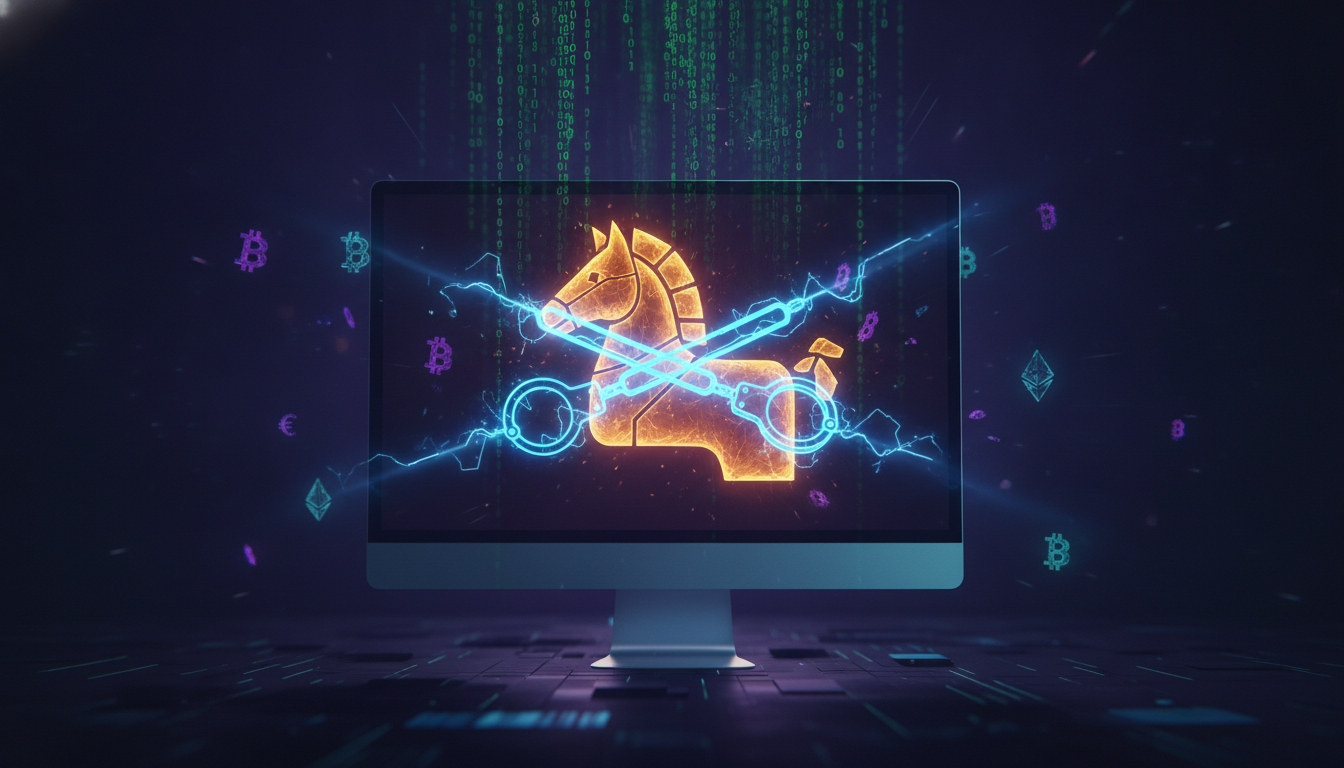
Instead, the software quietly scraped their systems for cryptocurrency credentials, resulting in a collective loss exceeding $220,000. It is the ultimate Trojan horse, redesigned for the desktop era. Players looking for a free afternoon of gaming instead provided a direct pipeline to their digital wallets, proving once again that if a digital product is entirely free, your graphics card might just be working an unannounced second job.
The paper trail
If the alleged digital heist was sophisticated, the exit strategy was considerably more down-to-earth. The FBI reported that the suspect chose to spend the stolen cryptocurrency funds on traceable UberEats gift cards.
It is an interesting choice of financial insulation—attempting to obscure a high-tech federal crime using paper trails tied directly to food delivery accounts. Apparently, even masterminds get hungry, though paying for dinner with highly monitored digital gift cards is a bit like leaving a business card on the kitchen counter of the house you just walked out of.
Why it matters
PC gaming relies heavily on the safety net of official launchers. When malicious code bypasses these filters, it shakes the fundamental contract between player and platform. For Valve, it means a tighter spotlight on how free-to-play titles are vetted before reaching millions of desktops. For players, it is a reminder that even when a game costs zero dollars, the final bill can still arrive in a very unexpected format.
Sources (2)
▾ tap to expand
Sources (2)
▾ tap to expandThe weekly gaming digest
One email a week with the biggest gaming news — PC, every console, hardware, and deals. No spam, unsubscribe anytime.
Make it yours
Make Nexzy yours.
The app turns this newsroom into your own — track the games you play, get news and guides tuned to you, and an AI that actually knows your games. Free on iOS & Android.
Chuy
Join the conversation
0 comments
Loading comments…
Keep reading

Sega's Daytona USA Arcade Classic Gets Native PC Port
One of Sega's most legendary cabinet racers drops its emulation baggage, finding a direct route to modern monitors through a clever homebrew rewrite.
Oct 2, 2026

Deadlock: Massive 'City Never Sleeps' Patch Overhauls Valve's Unreleased Shooter
Valve continues to treat its unreleased, invite-only shooter like a live-service titan, dropping a massive visual and roster update for a game you still need a friend's permission to play.
Oct 1, 2026
Gears of War: E-Day Storage Requirements Demand a Serious SSD Cleanup
Preparing for the Locust invasion means clearing some serious hard drive space, as the upcoming prequel demands a triple-digit download.
Oct 1, 2026